Ready to Work With a Seawater Desalination System Manufacturer?
Send us your water source, required capacity, vessel or project location, operation mode preference, and installation requirements. KYsearo can prepare a factory-direct technical proposal, customized RO desalination solution, and B2B quotation for your marine, offshore, island, or brackish water project.
Stop Asking for “One Desalination Machine.” Begin Asking for Daily Water
Ability obtains political.
In the seawater desalination system business, I see buyers talk about “20 lots,” “50 heaps,” or “one container plant” as if capacity were a sticker on the side of a pump skid, when the genuine number is hidden inside people matter, operating hours, salinity, membrane layer fouling, generator stability, turn down pressure, and whether the client expects hotel-style showers or survival water.
So what are you in fact acquiring?
You are acquiring fresh water production each day. Not fantasizes. Not brochure circulation. Not the tidy, factory-test number printed beside a 25 ° C feedwater presumption.
The hard reality: most poor desalination acquisitions begin with a careless concern. “How much output do I need?” audios easy, but it is really a demand research, an operating-risk research, and a spending plan admission all in one sentence.
The Globe Health Organization provides emergency situation numbers that are much less than normal residential consumption: 7.5 L/person/day may cover standard physiological need, 15 L/person/day is a minimal emergency situation target, and about 20 L/person/day covers basic health and food hygiene in emergency situations. However if you size a permanent seawater purification system on emergency survival logic, people will despise the plant by week 2.
For a real property, island, camp, marine, or resort installation, I would not start below 125– 150 L/person/day unless the job has stringent rationing, low-flow fixtures, washing outsourcing, or greywater reuse. And indeed, that number is unsightly. Water demand usually is.
Currently add book. I typically utilize 20– 30% book for tiny and medium salt water reverse osmosis system capacity planning, because membrane layers age, cartridge filters obstruct, pumps shed performance, operators skip cleaning, and feedwater gets worse after storms.
That indicates a 100-person residential task must not delicately buy a 12 T/D plant and anticipate convenience. I would certainly consider 20 T/D as the rational minimum, especially if the system will run less than 24 hours per day.
Why “Liters Per Day” Beats “Circulation Per Hour”
Manufacturers love hourly flow since it looks tidy.
But customers consume water in tops: morning showers, lunch cooking, laundry blocks, night washing, cleaning up shifts. The membrane layer does not care about your peak need. The storage tank does.
That is why desalination system output calculation have to include both:
Preparation Thing
Conventional Price quote
Why It Issues
Survival drinking water
1– 3 L/person/day
Only drinking; not cleaning, cooking, sanitation, or washing
Emergency situation fundamental water
15– 20 L/person/day
Temporary altruistic planning, not typical residential life
Minimum residential preparation
50– 100 L/person/day
Basic individual and domestic use array frequently referenced in water-rights conversations
Practical residential use
125– 150 L/person/day
Extra sensible for showers, laundry, cleansing, cooking
Offers operators time for evaluation, CIP preparation, filter adjustment, and power problems
UN-Water’s 2023 JMP update reported that 2.2 billion people still did not have safely managed alcohol consumption water in 2022, including 115 million alcohol consumption surface water; that fact issues because it advises us that “water access” is not a slogan, it is a capability and integrity trouble. A system that generates tidy water only when feedwater is excellent is not a water safety and security system. It is a lab plaything.
The Blunder Nobody Admits: Designing for 24-Hour Procedure
I dislike 24-hour presumptions for tiny plants.
A salt water desalination system can run continuously, yet creating your entire need around ideal continuous operation is reckless. What takes place when the consumption filter obstructs at midnight? What takes place when the generator journeys? What occurs when the operator uncovers SDI has climbed after a tide adjustment?
Exactly.
Use 16– 20 functioning hours daily for useful sizing unless you have trained drivers, standby pumps, redundancy, secure power, and a maintenance contract that really responds to calls.
Example:
You require 20,000 L/day.
If running 20 hours/day:
20,000 ÷ 20 = 1,000 L/hour
If running 16 hours/day:
20,000 ÷ 16 = 1,250 L/hour
That difference adjustments pump selection, membrane layer quantity, pretreatment, energy load, and tank dimension. It may additionally determine whether you need a skid system or a 20 feet containerized salt water desalination system.
Do Not Neglect Healing Rate
Recuperation is where sales pamphlets get slippery.
For seawater reverse osmosis, healing is generally far lower than brackish-water RO due to the fact that salt water includes roughly 35,000 mg/L TDS, and the osmotic pressure penalizes the pump. A tiny SWRO system might recover around 25– 40% depending on salinity, temperature level, membrane layer arrangement, antiscalant program, and discharge rules.
That suggests generating 20 m FOUR/ day of penetrate might call for roughly 50– 80 m SIX/ day of salt water feed.
This is not a little information. It impacts consumption pump dimension, pretreatment filter loading, brine discharge, power draw, and chemical price.
The Dubai Hassyan Salt water Reverse-Osmosis Job reveals why big drivers stress over effectiveness: DEWA defines the task at 180 MIGD, clean-energy powered, with completion arranged for Q1 2027 and AED 3.377 billion in investment. At that range, one bad assumption is not a nuisance. It is a monetary injury.
The Real Sizing Method for a Seawater Purification System
Below is exactly how to calculate water result for a seawater purification system in a way that does not humiliate you later on.
First, define individuals matter. Permanent citizens are easy. Short-lived labor, guests, crew turning, vacationers, people, or manufacturing facility workers are not. Usage peak occupancy, not average occupancy.
Second, appoint day-to-day water demand per person. I make use of these working bands:
Usage Case
Suggested Layout Demand
Remark
Emergency situation drinking only
3– 7.5 L/person/day
Not appropriate for normal living
Calamity camp fundamental use
15– 20 L/person/day
Hygiene is still restricted
Worker camp with rationing
50– 80 L/person/day
Washing and showers have to be managed
Regular domestic use
125– 150 L/person/day
Excellent preparation variety for homes, island real estate, tiny neighborhoods
Resort/ hospitality
180– 300+ L/person/day
Washing, kitchen areas, pools, cleaning, and visitor habits adjustment every little thing
Industrial procedure water
Project-specific
Never ever estimate without procedure data
Third, include a security element. For a tiny salt water desalination system, I choose 25%. For remote islands, marine solution, emergency websites, or unstable consumption problems, I may push greater.
Fourth, set reasonable operating hours. Do not default to 24.
Fifth, add storage space. The plant makes water; the storage tank shields people from the plant’s state of mind swings.
20 m TWO/ day salt water reverse osmosis system capacity
But I would certainly also request:
pretreatment sized for actual salt water feed, not just penetrate outcome; cartridge purification prior to RO; antiscalant dosing; online conductivity; high-pressure pump matched to salinity; automated flushing; tank capacity; and a prepare for membrane layer cleaning.
Tiny information. Large bill.
If the seawater consumption lugs algae, sand, shells, or seasonal turbidity, add an automated self-cleaning filter before the fine filtering stage. Pretreatment is not decor. It is just how membranes make it through.
What Buyers Typically Take Too Lightly
The initial ignored product is shower actions. A ten-minute shower can shed with even more water than a person’s whole emergency situation alcohol consumption requirement.
The second is washing. Camps and vessels constantly claim washing is somebody else’s problem up until attires start scenting.
The third is downtime. RO membranes do not fail politely. They stop working via signs and symptoms: increasing conductivity, dropping permeate flow, boosting differential pressure, and extra chemical cleaning than the quote ever before pointed out.
The fourth is storage. A desalination plant without adequate storage space is a nerves without memory.
The fifth is feedwater quality. A seawater desalination system near a clean overseas intake behaves in different ways from one near a harbor, fish ranch, river mouth, or sloppy coastal construction area.
FAQ
Just how much outcome do I require for a salt water desalination system?
You require enough salt water desalination system output to cover peak everyday demand, reserve capacity, sensible operating hours, and storage space losses, not simply the average variety of people multiplied by drinking water demand. For residential use, 125– 150 L/person/day is a functional standard prior to including a 20– 30% safety variable.
For 100 individuals, that typically means 15,625– 18,750 L/day after a 25% get. In typical project language, I would go over a 20 T/D seawater purification system, not a hardly sized 12– 15 T/D system.
Exactly how do I calculate RO desalination plant flow rate?
RO desalination plant circulation price is computed by splitting needed fresh water manufacturing daily by the variety of actual operating hours available, after including a reserve variable for fouling, downtime, and feedwater variant. A system needing 20,000 L/day over 20 hours must produce concerning 1,000 L/hour.
If you only run 16 hours/day, the exact same task needs 1,250 L/hour. That is why 2 systems with the very same “day-to-day capacity” can have extremely various pump and membrane layer layouts.
Just how much water can a desalination system generate?
A desalination system can create anything from a few hundred liters each day to thousands of hundreds of cubic meters each day, depending on membrane layer location, stress, recuperation price, feedwater salinity, pretreatment, energy supply, and running hours. Small containerized SWRO systems frequently sit in the 20– 200 T/D range.
For towns, camps, islands, marine vessels, and building and construction sites, the sensible concern is not optimal outcome. It is whether the system can hit the required day-to-day outcome under warm, filthy, genuine salt water problems.
Is 1 liter per person each day sufficient?
One liter each daily is not enough for regular living due to the fact that it only comes close to bare survival consuming demand and omits cooking, handwashing, showering, laundry, bathroom use, cleaning, and food health. For preparing residential desalination, 125– 150 L/person/day is much more reasonable.
Survival mathematics makes systems look less expensive. Residential math makes systems job. That is the difference.
Should I choose a 20 ft or 40 ft containerized desalination system?
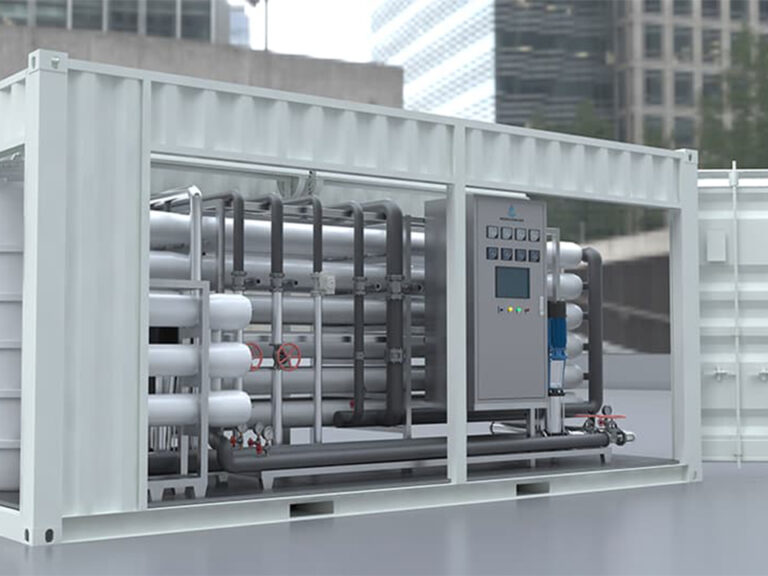
A 20 ft containerized desalination system is normally appropriate for compact, lower-capacity tasks where mobility, quick setup, and simplified operation issue, while a 40 feet containerized system far better fits bigger circulations, stronger pretreatment, chemical dosing room, electric cupboards, and simpler maintenance accessibility. The right option depends upon result, not container satisfaction.
For 20– 50 T/D, 20 ft may function. For bigger or more complicated seawater jobs, the 40 feet layout typically saves trouble because operators require area to move, inspect, repair, and clean.
All-time Low Line
I will state the undesirable component simply: do deny the smallest salt water desalination system that matches your spread sheet.
Purchase the system that matches human habits, negative climate, membrane layer aging, driver errors, power disruptions, and the reality that nobody thanks you for “nearly enough water.”
For residential preparation, start with 125– 150 L/person/day, include 20– 30% get, divide by 16– 20 sensible operating hours, after that select tools with pretreatment and storage space sized around the feedwater you really have.
Need a practical ability referral for your website? Share your people count, salt water resource, daily operating hours, power supply, and water-use type, and we can match the outcome range to a containerized seawater desalination system without the usual sales fog.
Kysearo is a leading water treatment manufacturing company based in China, specializing in the design and manufacture of high-efficiency water treatment systems. With over 20 years of industry experience, we are dedicated to revitalizing various water sources, including seawater, well water, borehold, tap water, and underground water etc,.